Applications & Cases
Home / Applications & Cases
Challenge:
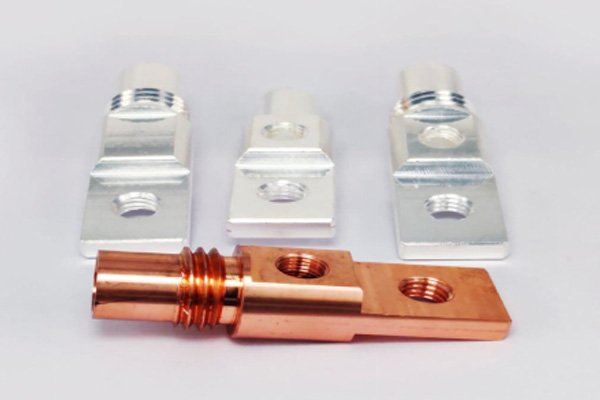
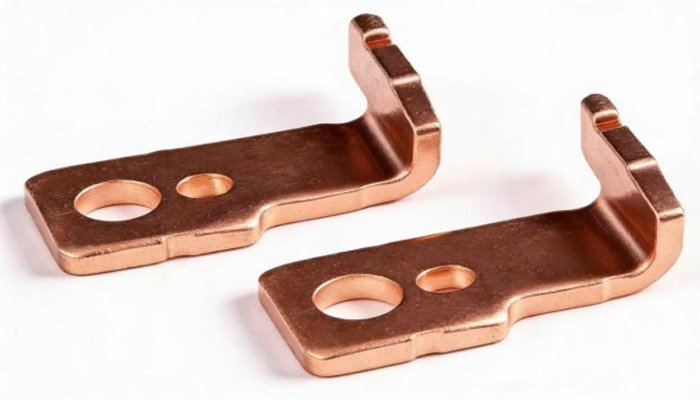
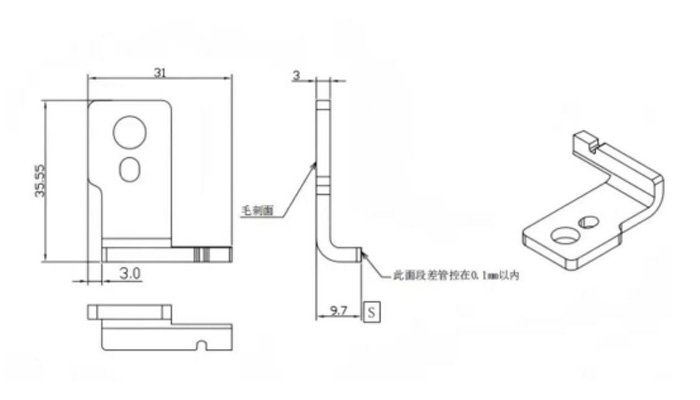
- Complex Geometry: Integrated L-shape with multi-step features.
- Micro-Tolerance: Critical step-height control within ±0.1mm.
Solution:
- CNC Milling: High-precision T2 copper processing.
- Zero-Burr Finish: Specialized deburring for high-voltage safety.
- CAD Alignment: 100% verification against engineering blueprints.
Result:
- Perfect Fit: 100% assembly pass rate, no on-site adjustments.
- Arc-Free: Smooth surfaces ensure reliable electrical contact.
- Rapid Integration: Consistent dimensions speed up module assembly.
Related posts
Common Copper Busbar Manufacturing Defects and How to Prevent Them
Quality in custom copper busbar manufacturing comes from controlling the process before defects reach final inspection. The most useful quality conversation is not “Can you inspect?” but “Ho
Why Do Copper Busbar Holes Need Tight Tolerances?
Busbar holes do more than accept a bolt. They position the conductor in the assembly and help create the electrical joint. When a critical hole is misplaced, the result can be difficult inst
Why Do Copper Busbars Overheat? Causes and Prevention
Copper is highly conductive, but any busbar can overheat when the real operating conditions differ from the design assumptions. The root cause is often local: a poor joint, restricted airflo
Copper Busbar RFQ Checklist for BESS Projects
BESS busbars are custom components integrated into a larger electrical and mechanical design. A BESS-specific RFQ should give the manufacturer enough information to quote the correct current
How to Specify Copper Busbars in an RFQ
A complete request for quotation lets a manufacturer quote the right busbar faster and reduces revision cycles. The goal is to describe the part's functional requirements and the evidence yo
How to Choose a Custom Copper Busbar Manufacturer
Choosing a custom copper busbar manufacturer means choosing more than a source of copper. The supplier must reliably translate a drawing into a component that fits the assembly, carries the
Copper Busbar Plating: Tin vs Nickel vs Bare Copper
Copper has excellent conductivity, but its exposed surface changes over time. Plating can support corrosion resistance, contact consistency and assembly requirements. The right choice depend
Copper Busbar Insulation Methods: Epoxy Coating vs Heat Shrink
Insulation is a functional part of a copper busbar, not merely a coloured finish. It helps prevent unintended contact, supports safe spacing in compact equipment and protects the conductor f
How Are Copper Busbars Bent?
Bending lets a copper busbar follow a compact electrical route through a cabinet, rack or power assembly. A successful bend must put the contact pads in the correct final position without da
How Are Copper Busbars CNC Machined?
CNC machining creates the holes, slots, contours and reference features that allow a custom copper busbar to fit its electrical assembly. The goal is not simply to remove material; it is to
How Are Custom Copper Busbars Manufactured?
Custom copper busbars are manufactured from an engineering drawing, not from a generic catalogue dimension. The process turns a specified current path into a repeatable component with define
Laminated Busbar vs Flexible Copper Busbar: What Is the Difference?
Both laminated busbars and flexible copper busbars may contain multiple copper layers, but their purpose is different. A flexible busbar is primarily a mechanical solution: it carries curren