

CNC-Machined Copper Terminals & Threaded Connectors
Custom copper terminals and threaded connectors designed for compact, high-current electrical assemblies. The parts combine precision-machined mounting features, controlled conductor geometry, and application-specific interfaces for industrial DC power equipment, battery test systems, and power-conversion cabinets.
Challenge
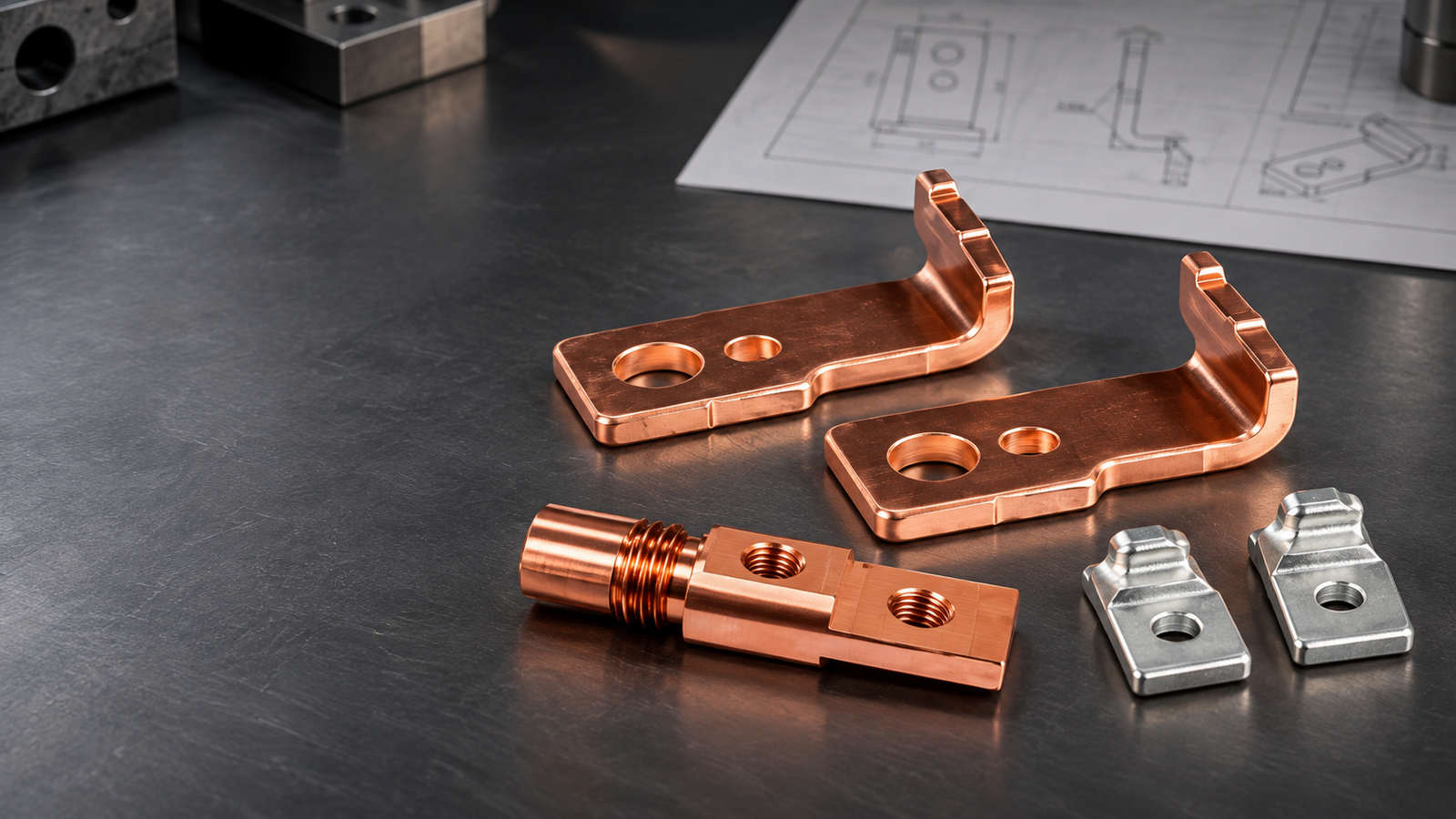
The customer required several copper connection components for a compact high-current assembly: bent terminals for bolted connections and threaded copper connectors for an interface with limited installation space. The components needed to fit the mating hardware consistently while preserving a short, low-resistance current path.
The main risks were hole-position variation, burrs around machined edges, inaccurate threads, and poor repeatability between production batches. Any of these issues could slow assembly or affect contact quality in the finished equipment.
Solution
Our engineering team reviews the supplied drawing and mating-part requirements before production. Copper terminals are machined with dedicated fixtures to control hole location, bend geometry, and terminal alignment. Threaded connector features are produced through controlled CNC turning and milling, followed by thread verification and edge deburring. Each part is cleaned and inspected before packing; tin plating can be specified where a defined contact finish is required.
- Drawing & mating-part review before production
- Dedicated fixtures control hole location, bend & alignment
- Controlled CNC turning / milling with thread verification
- Deburring, cleaning & inspection; tin plating optional
From Drawing to Finished Part
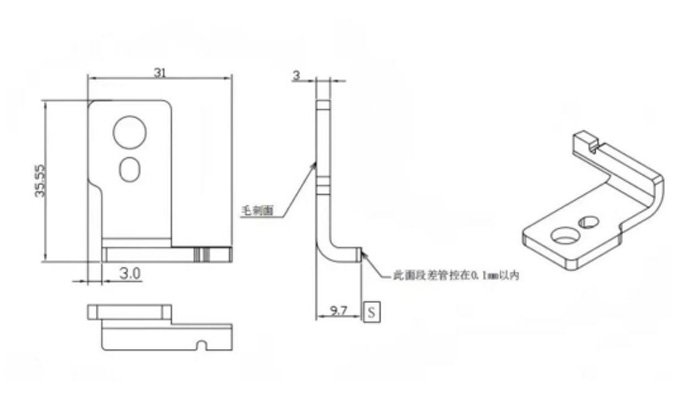
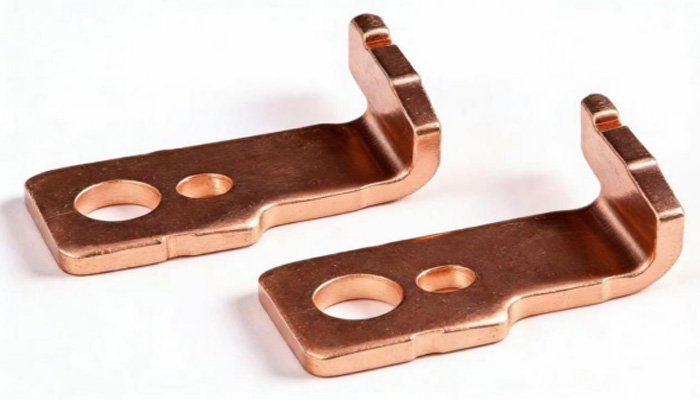
Bent mounting tab formed exactly to the drawing — controlled hole positions, bend angle and surface flatness held within 0.1 mm.
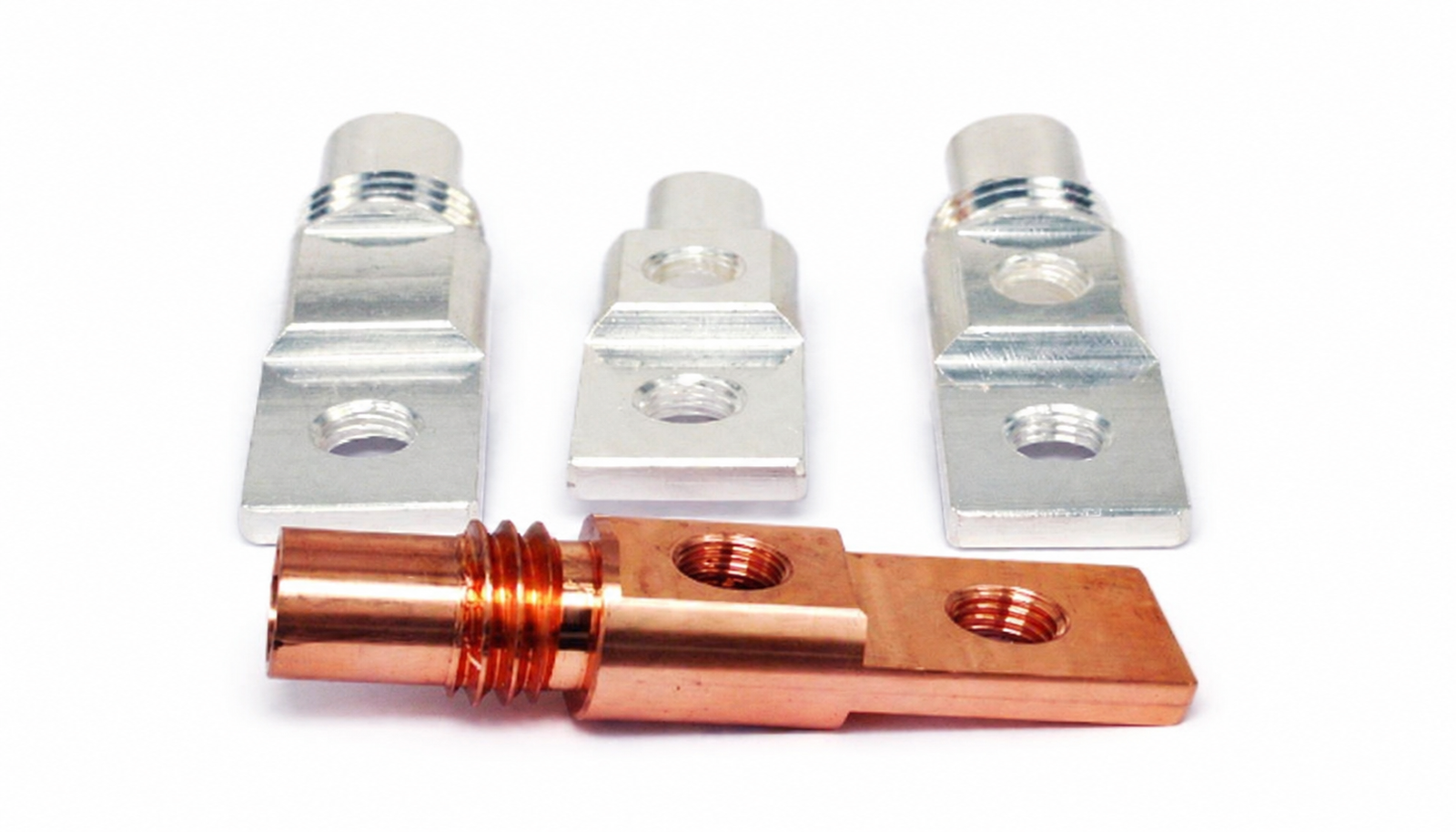
CNC-turned and tapped to the drawing — M10, PT 1/8 and M20 thread features are machined and verified before finishing.

Key Advantages
Complex Copper Geometry
Bent tabs, mounting holes, slots, and threaded interfaces combined in one custom component.
Assembly-Ready Accuracy
Controlled machining and inspection help ensure a reliable fit with mating hardware.
Clean Contact Areas
Burr removal and careful finishing protect the connection surface during installation.
Drawing-Based Customization
Dimensions, thread form, copper grade, finish, and packaging defined around your project.
Frequently Asked Questions
They are used in industrial DC power cabinets, battery test equipment, converters, charging equipment, switchgear, and other high-current assemblies.
Yes. We can combine CNC milling, drilling, tapping, turning, and forming processes according to the part design.
Thread type, pitch, tolerance, and inspection method are confirmed from the drawing and checked during production.
Yes. Hole diameter, spacing, slots, and conductor shape can all be produced to the customer's drawing.
Tin plating and other specified finishes can be arranged where the application requires a defined electrical-contact or corrosion-protection surface.
A 2D drawing with dimensions and tolerances is preferred. A 3D model, mating-part details, material requirement, and annual quantity will help speed up review.
Have a high-current connection part to develop?
Share your drawing and mating requirements with our engineering team — we'll review your design and recommend a suitable manufacturing process.