Real Engineering Cases

Practical copper busbar solutions for BESS,EV battery packs and power distribution systems.

Product

Flexible Laminated Copper Busbar

Multi-layer copper foil flexible busbar with heat shrink insulation — lightweight, flexible, and high-conductivity power connections for EV battery packs, energy storage systems, charging piles, and high-voltage cabinets.
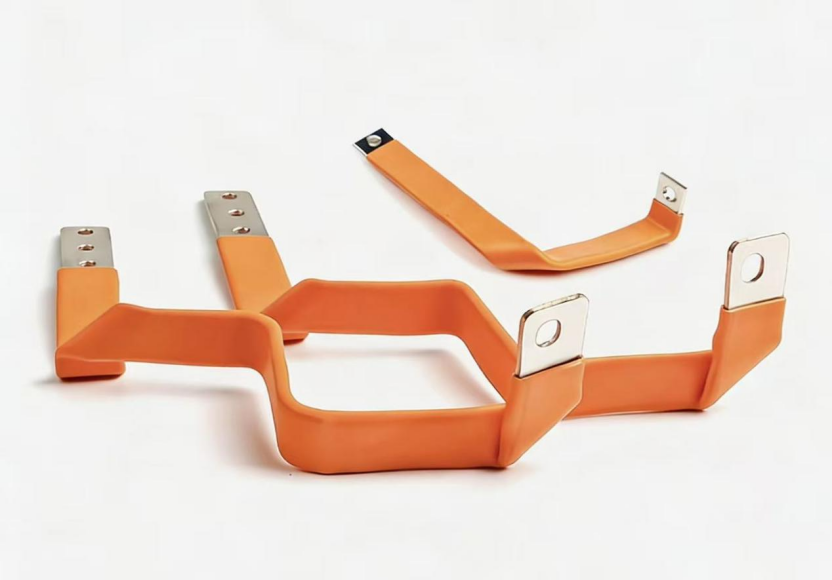
Flexible Laminated Copper Busbar for EV and Energy Storage
Conductivity
>100% IACS
Temp Range
-45°C ~ 150°C
Bending Cycles
10,000+
Material
T2 Copper

Challenge

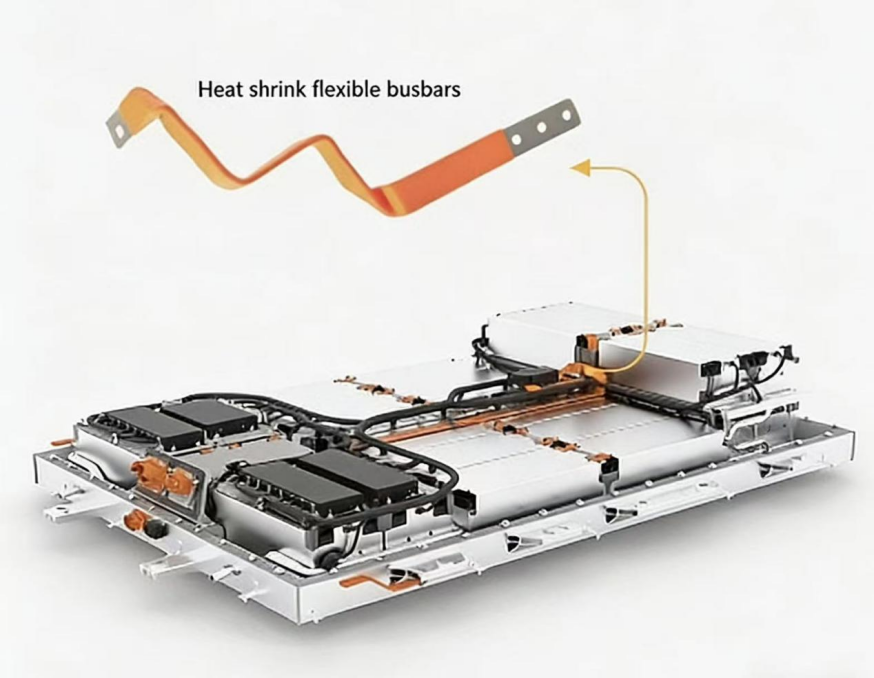
EV battery packs and energy storage systems require lightweight, flexible power connections that withstand vibration, thermal cycling, and repeated bending during assembly and operation. Traditional rigid busbars are heavy, inflexible, and prone to fatigue failure in dynamic environments. Compact battery layouts demand thin, multi-layer conductors that maintain high conductivity while absorbing mechanical stress.

Flexible Copper Busbar Challenge - Compact Battery Layout

Solution

Our flexible laminated copper busbars are constructed from multiple layers of thin copper foil (0.1mm-1mm) with heat shrink insulation (EVA/PE or PVC). With >100% IACS conductivity, ≥500N tensile strength, and 10,000+ bending cycles at 15°, they deliver reliable performance in EV powertrains, energy storage, charging piles, and high-voltage cabinets.

  • Multi-layer copper foil (0.1mm-1mm), >100% IACS conductivity
  • Heat shrink insulation: PE (2700V AC) or PVC (3500V AC)
  • 10,000+ bending cycles at 15°, ≥500N tensile strength
  • Custom shapes for EV, energy storage, charging piles & more
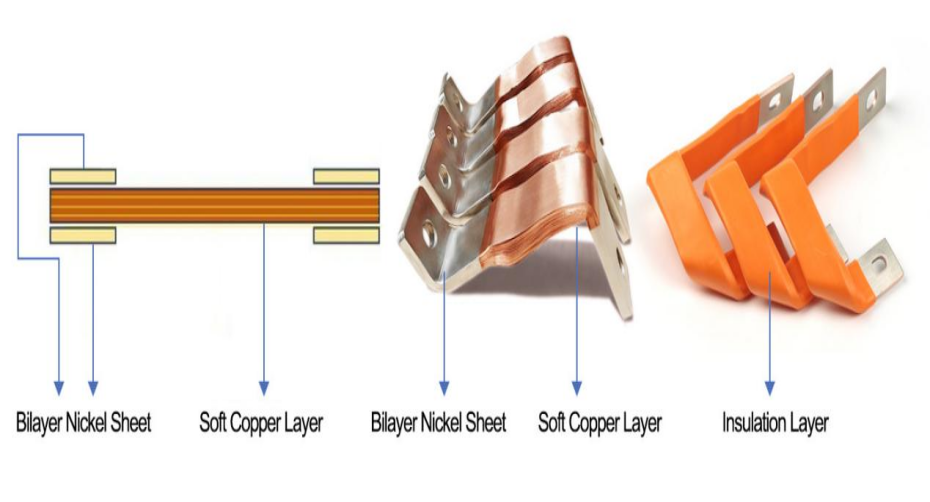
Flexible Laminated Busbar Solution - Multi-Layer Copper Foil
Why Choose Us

Key Advantages

High Conductivity

Laminated pressed-foil structure delivers >100% IACS conductivity; gradual-layer design improves energy efficiency.

Lightweight & Flexible

Lighter than rigid busbars, easier to install, can be made longer and in more custom shapes.

10,000+ Bending Cycles

Withstands 10,000+ bends at 15° without breaking; resists fatigue in vibration-prone EV environments.

Wide Temp & Corrosion

-45°C to 150°C operating range, 240h salt spray test, UL94V-0 flame retardant insulation.

FAQ

Frequently Asked Questions

What is a flexible laminated copper busbar?

A flexible laminated busbar is constructed from multiple layers of thin copper foil (0.1mm to 1mm thickness), bonded together and covered with heat shrink insulation. Compared to rigid copper busbars, it is lighter in weight, more flexible to install, and offers excellent conductivity and heat dissipation. It is widely used in EV battery packs, power distribution cabinets, energy storage batteries, and solar systems.

What applications are flexible busbars used for?

Flexible laminated busbars are used in electric vehicle powertrain systems, energy storage batteries, EV charging piles, high-voltage cabinets, switchgear assemblies, air-cooled battery pack systems, and transformers. Their flexibility makes them ideal for dynamic environments with vibration and thermal cycling.

What conductivity do your flexible busbars achieve?

Our flexible busbars achieve over 100% IACS conductivity. The laminated pressed-foil structure improves conductivity, and the gradual-layer lamination design enhances energy efficiency. We provide detailed temperature rise reports for all products based on cross-sectional area.

What is the bending durability of flexible busbars?

Our flexible laminated busbars can withstand over 10,000 bending cycles at a 15-degree angle without breaking or damage. The multi-layer laminated construction resists fatigue failure even after thousands of bending cycles, making them suitable for vibration-prone environments.

What insulation materials are available?

We offer PE (polyethylene) and PVC (polyvinyl chloride) insulation. PE material withstands 2700V AC, operates from -40°C to 125°C, with UL224 VW-1 flame retardant rating. PVC dip-coating withstands 3500V AC, operates from -40°C to 125°C, with UL94V-0 flame retardant rating, and is suitable for irregularly shaped products.

What conductor materials can be used?

Standard conductor materials include T2 copper (E-CU58, CU-ETP, C11000, C1100), TU2 oxygen-free copper (OF-CU, CU-OFE, C10100, C1011), and aluminum 1060. Custom materials are also available upon customer request.

What surface treatments and certifications are available?

Terminal surfaces can be tin-plated, nickel-plated, silver-plated, or custom finished. Our products pass 240-hour neutral salt spray testing and are certified under ISO45001, ISO14001, and IATF16949. Flame retardant rating is UL94V-0.

Have a similar project that needs custom busbars?

Share your drawings or specifications — our engineering team will provide a tailored solution

Get a Custom Quote