Real Engineering Cases

Practical copper busbar solutions for BESS,EV battery packs and power distribution systems.

Product

Heat Shrink Insulated Copper-Aluminum Composite Busbar

Flexible copper-aluminum hybrid busbar with 10kV heat shrink insulation — engineered for vibration-resistant, low-loss power connections in energy storage systems, PV inverters, and wind power converters.

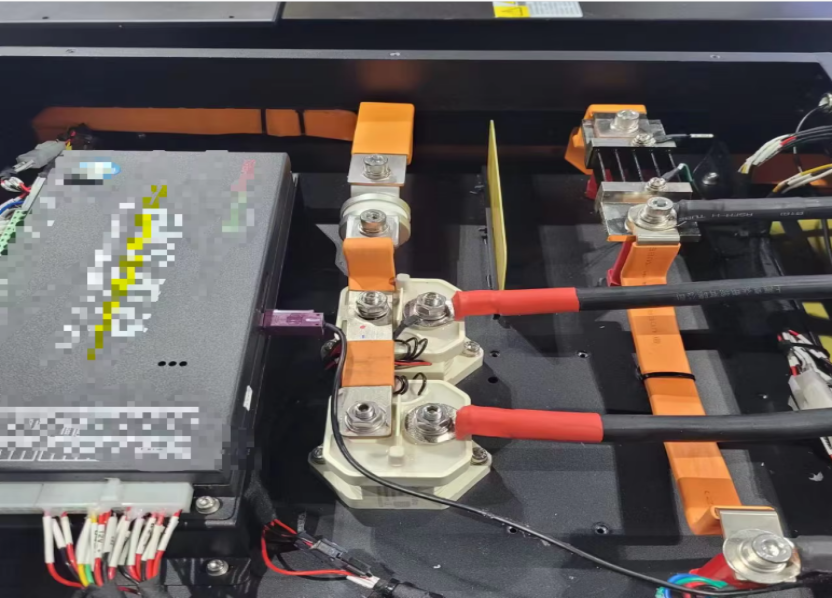
Heat Shrink Busbar Installation in BESS Cabinet
Voltage Rating
10kV DC
Conductivity
≥98% IACS
Insulation
10kV Heat Shrink
Application
BESS / PV Inverter

Challenge

Power connections inside BESS cabinets, PV inverters, and wind converters face constant vibration, thermal cycling from -40°C to 125°C, and high-voltage insulation requirements. Traditional rigid busbars cannot absorb thermal expansion, leading to joint loosening and increased contact resistance over time.

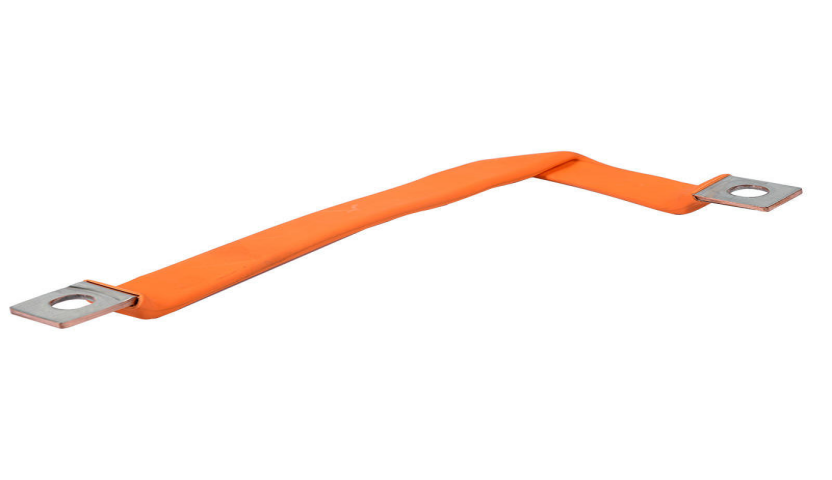
Heat Shrink Insulated Copper Busbar Product

Solution

Our copper-aluminum composite busbar combines flexible braided copper with rigid stamped terminals, joined by diffusion welding and protected by 10kV heat shrink insulation — engineered for reliable performance in harsh power electronics environments.

  • T2 copper (99.95%) + 1060 aluminum hybrid via diffusion welding
  • Flexible braided section absorbs vibration & thermal expansion
  • 10kV heat shrink tubing with 5880V DC withstand voltage
  • Tin/nickel plated terminals, 480h salt spray resistance
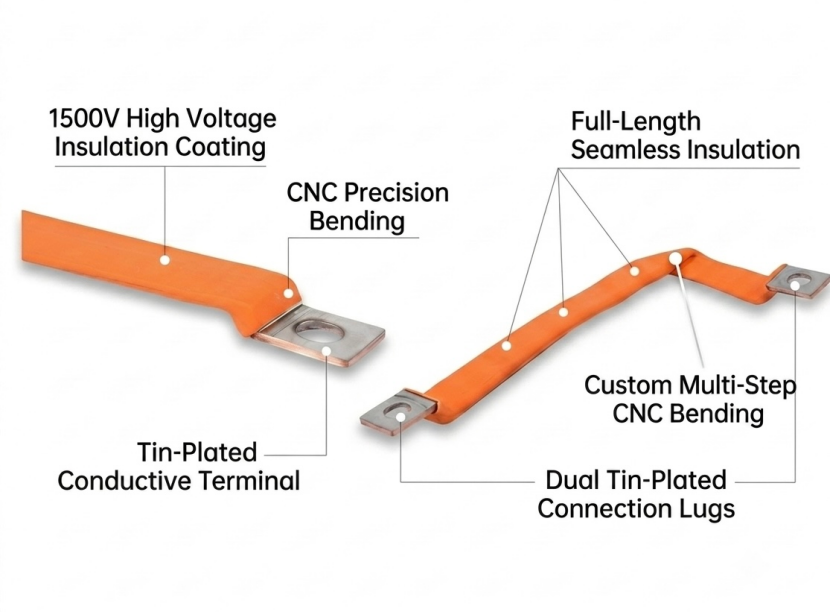
Copper-Aluminum Composite Busbar Structure Diagram
Why Choose Us

Key Advantages

15-20% Cost Reduction

Copper-aluminum hybrid construction lowers material cost while maintaining copper-level conductivity at contact surfaces.

Vibration & Thermal Resistant

Flexible braided section absorbs vibration and thermal cycles. After 200 cycles (-40°C~120°C), resistance change <5%.

10kV Insulation Safety

Heat shrink tubing withstands 5880V DC / 4200V AC, insulation resistance ≥500MΩ at 2500VDC, UL-94 V0 flame retardant.

Low Contact Resistance

Diffusion welding achieves molecular-level bonding, contact resistance ≤5μΩ at 200A, reducing power loss by 5%+.

FAQ

Frequently Asked Questions

What equipment is this heat shrink busbar used in?

This copper-aluminum composite busbar is designed for internal power connections in battery energy storage systems (BESS), PV inverters, wind power converters, and battery PACKs. It connects battery modules to PCS units, or links power modules inside converter cabinets.

Why use copper-aluminum composite instead of pure copper?

The T2 copper contact interface (99.95% purity) maintains ≥98% IACS conductivity for low-resistance connections, while the 1060 aluminum body reduces material cost by 15-20% and overall weight. The two metals are joined via diffusion welding for molecular-level bonding with contact resistance ≤5μΩ at 200A.

What is the insulation rating of the heat shrink tubing?

The heat shrink tubing is rated for 10kV. It withstands 5880V DC / 4200V AC with leakage current ≤1mA, and maintains insulation resistance ≥500MΩ at 2500VDC test voltage.

What is the benefit of the flexible braided section?

The multi-strand braided copper section provides flexibility to absorb mechanical vibration and thermal expansion/contraction during charge-discharge cycles. After 200 thermal cycles (-40°C to 120°C), contact resistance change remains <5%, preventing joint loosening in wind turbine and solar inverter environments. Tensile strength ≥120MPa.

What is diffusion welding?

Diffusion welding is a solid-state bonding process that joins copper and aluminum at the molecular level under controlled temperature and pressure, without filler metal. This creates a permanent, low-resistance bond (≤5μΩ at 200A) that outperforms mechanical crimping or bolted joints, reducing power loss by 5%+.

What is the operating temperature range?

The busbar operates reliably from -40°C to 125°C, covering extreme outdoor environments from cold climate energy storage sites to high-temperature inverter cabinet interiors.

What surface treatments are available?

Terminal surfaces are available in nickel plating, tin plating, or bare copper. Nickel/tin plating passes 480-hour salt spray testing without rust, suitable for coastal and high-humidity environments, extending service life to 15+ years and reducing maintenance frequency.

What certifications and testing are included?

Products are IATF1649 and RoHS certified, with UL-94 V0 flame retardant rating. Each shipment includes ISO9001 certification, third-party test reports, and 100% factory inspection. Backed by 5-year warranty. The product contains no hazardous substances and meets international environmental standards.

Have a similar project that needs custom busbars?

Share your drawings or specifications — our engineering team will provide a tailored solution

Get a Custom Quote